
Do Male Cockatiels Display More Color Than Females?

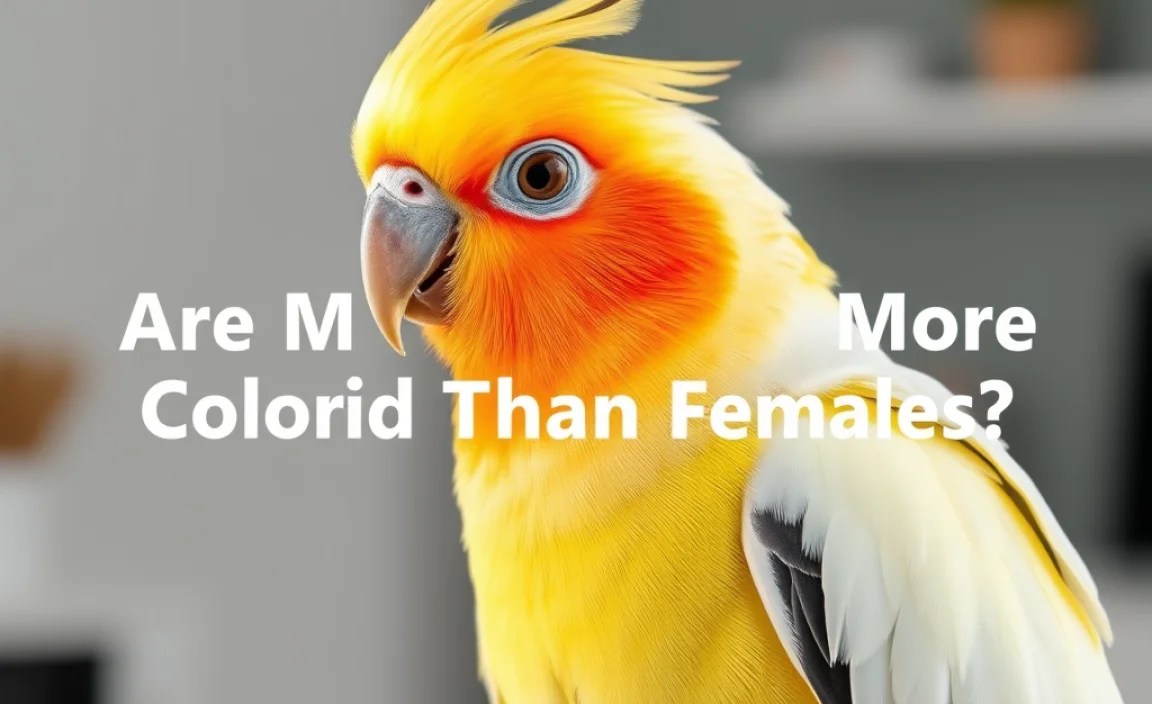
Imagine having a bird friend who’s dressed differently. Male cockatiels often stand out with their bright yellow faces and vivid cheek spots. Females, though pretty, wear more muted hues. But why is this? Male cockatiels use their colors to impress mates and show confidence. Can you guess who sings more sweet tunes? It’s the males again! They charm with their colors and voices, making them the star performers among cockatiels.
Understanding Cockatiel Coloration

Factors influencing coloration in cockatiels. Common color mutations and variations.
Cockatiels are nature’s confetti! They come in many colors due to genetics. Generally, male cockatiels are brighter than females. They like to show off, think of them as the peacocks of the parrot world. Factors like age and diet also tweak their shades. Want to know some fun color types? There’s **Lutino**, with its all-yellow look, and **Pied**, which gives a patchy appearance. The ever-popular **Pearl** is a stunner too! Feeling curious? Let’s explore more!
| Color Mutation | Characteristics |
|---|---|
| Lutino | All yellow with red eyes |
| Pied | Patchy, mixed colors |
| Pearl | Patterned spots on wings |
Role of Maturity on Plumage
Color changes as cockatiels mature. Differences in juvenile and adult plumage.
As cockatiels grow, their colors change like magic. The juveniles are often in disguise, with duller feathers. But as they mature, their plumage brightens, much like a birdie glow-up. Young males might seem a bit shy, hiding beneath gray shades. Yet, as they grow, vibrant colors emerge, revealing their full, colorful potential. Females keep it classy, maintaining a more consistent look with subtle beauty.
| Stage | Plumage Characteristics |
|---|---|
| Juvenile | Muted colors, mostly gray |
| Adult Male | Bright and colorful with striking patterns |
| Adult Female | Elegant and consistent, with earthy tones |
So, while both sexes start slightly dull, males get the flashy costume as they mature. Females prefer the subtle charm, sporting muted, graceful feathers. It’s like the difference between a flashy party outfit and a cozy, classic dress. Yet, both plumages have their unique charm and role in nature’s grand fashion show.
Behavioral Displays and Coloration

Role of coloration in attracting mates. Behavioral differences in displaying plumage.
Have you ever seen a cockatiel flaunt its feathers like it’s modeling for a birdy fashion show? In the bird world, coloration plays a big role in attracting mates. Male cockatiels often have brighter colors. Why? It’s to impress the ladies, of course! Exhibit A shows how they strut their stuff:
| Behavior | Who’s More Flashy? |
|---|---|
| Color Display | Male |
| Dancing | Male |
| Perched Posing | Female (Surprise!) |
While males flaunt vibrant hues, females prefer subtle elegance with muted shades. The males twirl, dance, and sing, all while showing off their colorful wings. But don’t count the females out; they have their own charm. The females enjoy slow posing, letting their personalities shine through. One wildlife expert said, “It’s as if male cockatiels are trying to win a talent show, while females hold a royal court.” It’s nature’s way of saying even birds can be dramatic divas.
Environment and Its Influence on Color
Environmental factors affecting coloration. How diet and health impact plumage brightness.
No two cockatiels flaunt their feathers quite the same! The colors of their feathers can change with their surroundings. Sunlight, fresh air, and space to fly make colors brighter. Food also matters—fruits, veggies, and seeds bring out their shine. A healthy feather diet equals a cockatiel runway show. Got a favorite fruit cocktail? Share with your feathered friend!
| Factor | Effect on Color |
|---|---|
| Sunlight | Enhances feather brightness |
| Diet | Improves plumage vividness |
| Health | Maintains strong colors |
Breeding and Color Mutations
Popular color mutations in breeding. How selective breeding alters coloration.
Cockatiels are like little feathered artists. They’ve been known for their colorful palette. Through breeding, many wonderful color mutations have been created. Some popular ones include the pearly white Lutino, the eye-catching Cinnamon, and the dazzling Albino.
Selective breeding plays its magic by changing cockatiels’ colors over time. It’s like unlocking new shades on a birdy canvas! Breeders choose specific cockatiels to create new colors. It’s no wonder some people say breeding is part science, part art! Fun fact: Different mutations can make males or females appear more vibrant.
| Mutation | Color Description |
|---|---|
| Lutino | All white with bright yellow faces |
| Cinnamon | Brownish-grey tones with shades of tan |
| Albino | Pure white with red eyes |
Common Misconceptions About Cockatiel Colors
Myths surrounding cockatiel genders and colors. Clarifying misconceptions with scientific evidence.
There are many myths about cockatiel colors and sexes. Some think males are brighter than females. But this isn’t true. Colors can vary in both genders. Studies show both can have vibrant feathers. We should not judge by color alone. Instead, understanding behavior and genetics offers a clearer picture. Did you know males sing more than females? This is a fun way to spot differences!
Do males and females have different colors?
No, cockatiels can have a range of colors, regardless of being male or female. Color depends more on genetics than gender.
Conclusion
Male cockatiels are often more colorful than females. Males have brighter cheek patches and stronger color patterns. Female cockatiels usually have duller colors. This difference helps them hide better while nesting. If you’re curious, visit a pet store or read a bird guide to learn more about these fascinating birds.
FAQs
What Are The Visual Differences Between Male And Female Cockatiels In Terms Of Coloration And Markings?
Male and female cockatiels, which are colorful birds, look different. Male cockatiels have bright orange spots on their cheeks and a yellow face. Female cockatiels often have a gray face and lighter cheek color. Females also have yellow or white stripes under their tail feathers. These differences help you tell them apart.
How Does The Age Of A Cockatiel Affect The Difference In Coloration Between Males And Females?
When cockatiels are young, both males and females look very similar. As they get older, you can tell them apart by their colors. Male cockatiels have bright yellow faces and orange cheeks. Female cockatiels usually keep their gray color and have duller cheeks. So, age helps us see these color changes and tell the boys and girls apart.
Are There Any Specific Genetic Factors That Influence The Coloration Of Male And Female Cockatiels?
Yes, cockatiel colors come from their genes, like how we get our eye color. Male and female cockatiels can look different because they have different genes. Males might have brighter colors, while females often look more muted or grey. These color traits get passed down from their parents.
How Do Male And Female Cockatiels Use Their Coloration For Mating And Social Interactions Within Their Species?
Male and female cockatiels have different colors. Males often have bright yellow faces and orange cheek patches. These bright colors attract females during mating. Females usually have duller colors, which helps them hide from predators. Both use their colors to tell each other apart and communicate.
In What Ways Do Environmental Factors Influence The Coloration Disparities Between Male And Female Cockatiels?
Environmental factors like sunlight and diet can affect how bright the colors are on cockatiels. Male cockatiels often have brighter colors to attract females. If there’s lots of sunlight, their colors might shine more. The food they eat also helps keep their colors nice and bright.
{“@context”:”https://schema.org”,”@type”: “FAQPage”,”mainEntity”:[{“@type”: “Question”,”name”: “What Are The Visual Differences Between Male And Female Cockatiels In Terms Of Coloration And Markings?”,”acceptedAnswer”: {“@type”: “Answer”,”text”: “Male and female cockatiels, which are colorful birds, look different. Male cockatiels have bright orange spots on their cheeks and a yellow face. Female cockatiels often have a gray face and lighter cheek color. Females also have yellow or white stripes under their tail feathers. These differences help you tell them apart.”}},{“@type”: “Question”,”name”: “How Does The Age Of A Cockatiel Affect The Difference In Coloration Between Males And Females?”,”acceptedAnswer”: {“@type”: “Answer”,”text”: “When cockatiels are young, both males and females look very similar. As they get older, you can tell them apart by their colors. Male cockatiels have bright yellow faces and orange cheeks. Female cockatiels usually keep their gray color and have duller cheeks. So, age helps us see these color changes and tell the boys and girls apart.”}},{“@type”: “Question”,”name”: “Are There Any Specific Genetic Factors That Influence The Coloration Of Male And Female Cockatiels?”,”acceptedAnswer”: {“@type”: “Answer”,”text”: “Yes, cockatiel colors come from their genes, like how we get our eye color. Male and female cockatiels can look different because they have different genes. Males might have brighter colors, while females often look more muted or grey. These color traits get passed down from their parents.”}},{“@type”: “Question”,”name”: “How Do Male And Female Cockatiels Use Their Coloration For Mating And Social Interactions Within Their Species?”,”acceptedAnswer”: {“@type”: “Answer”,”text”: “Male and female cockatiels have different colors. Males often have bright yellow faces and orange cheek patches. These bright colors attract females during mating. Females usually have duller colors, which helps them hide from predators. Both use their colors to tell each other apart and communicate.”}},{“@type”: “Question”,”name”: “In What Ways Do Environmental Factors Influence The Coloration Disparities Between Male And Female Cockatiels?”,”acceptedAnswer”: {“@type”: “Answer”,”text”: “Environmental factors like sunlight and diet can affect how bright the colors are on cockatiels. Male cockatiels often have brighter colors to attract females. If there’s lots of sunlight, their colors might shine more. The food they eat also helps keep their colors nice and bright.”}}]}